On-site hydrogen supply
Methanol reforming hydrogen production provides hydrogen near the combustion load, reducing reliance on delivered pure hydrogen.

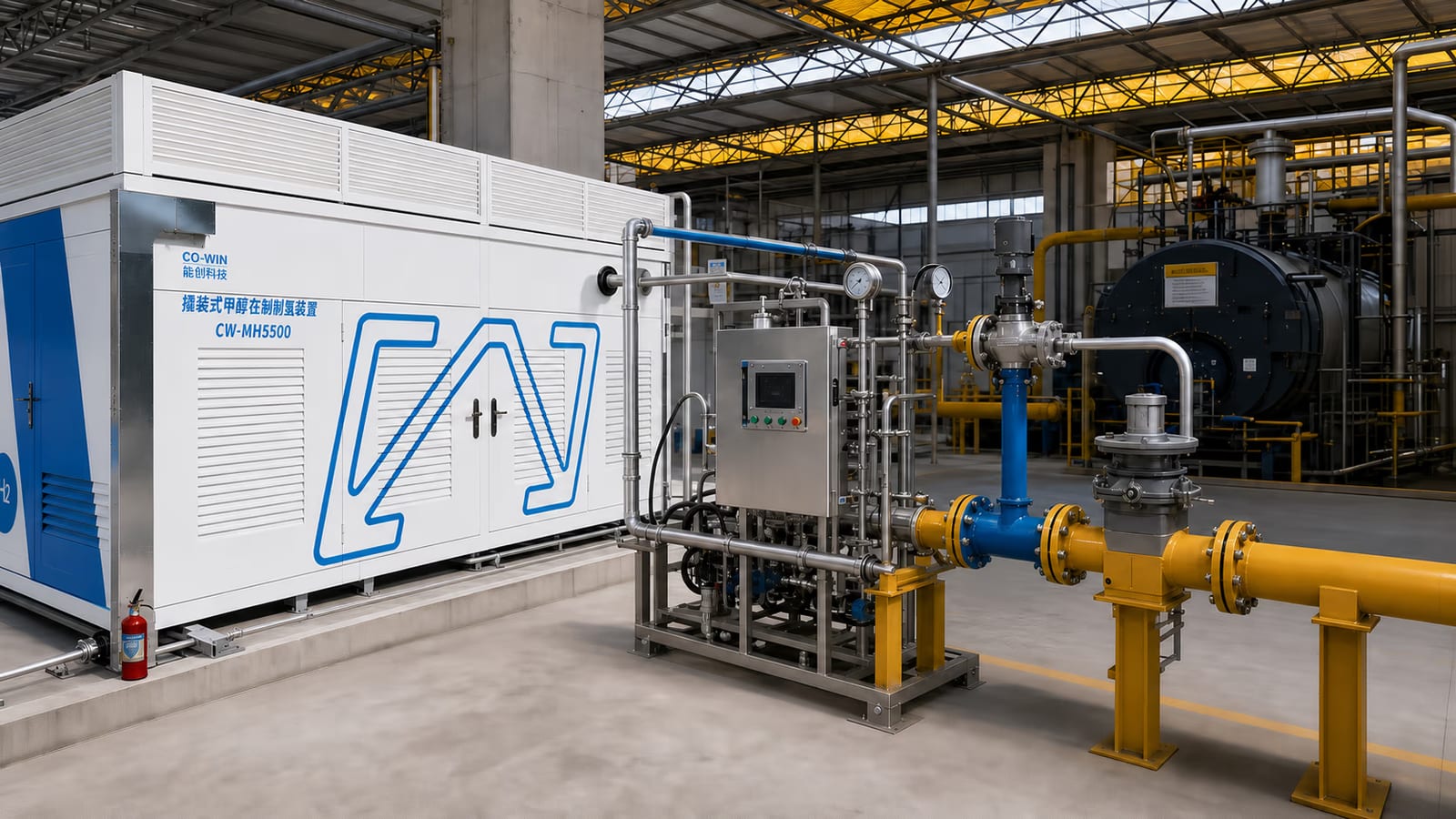
Hydrogen-Blended Combustion
A skid-mounted methanol online hydrogen generation and blending system supports industrial kiln combustion by dynamically blending hydrogen into natural gas according to load demand.
Project overview
The project applies CO-WIN's skid-mounted methanol online hydrogen generation equipment to an industrial glass kiln scenario. Hydrogen is produced on demand and blended with natural gas before entering the combustion system, helping the plant introduce hydrogen fuel without depending on a pure hydrogen supply chain.
For the Quanzhou glass factory application, the system is designed around dynamic adjustment based on load demand. The hydrogen blending ratio can respond to operating conditions, allowing the kiln to maintain practical fuel flexibility while reducing exposure to pure hydrogen fuel cost.
Compared with direct pure hydrogen firing, the blended route gives industrial users a more gradual transition path. It pairs existing natural gas infrastructure with on-site hydrogen generation, while creating measurable room for fuel-cost optimization and lower-carbon combustion upgrades.
Combustion system
Economic analysis
The reference model compares natural gas-only firing with a 23% hydrogen-blended natural gas scenario.
Methanol reforming hydrogen production provides hydrogen near the combustion load, reducing reliance on delivered pure hydrogen.
The system supports load-responsive adjustment so hydrogen participation can match practical industrial operating demand.
The reference calculation shows a 15.30% overall fuel-cost saving, with major reductions in pure hydrogen fuel expenditure.